A destination briefing for India travel trade If you’re still selling your Indian clients the same Vietnam circuit – Hanoi, Ha Long, Ho Chi Minh City – you’re leaving money on the table. Phu Quoc is the destination that closes deals. It has what Indian travelers actually want: warm water, white sand, good food options, […]
A destination briefing for India travel trade
If you’re still selling your Indian clients the same Vietnam circuit – Hanoi, Ha Long, Ho Chi Minh City – you’re leaving money on the table. Phu Quoc is the destination that closes deals. It has what Indian travelers actually want: warm water, white sand, good food options, luxury resorts, and family-friendly activities. And it costs a fraction of the Maldives.
This guide is written for you, the agent. Not the end traveler. By the time you finish reading, you’ll know how to position Phu Quoc, handle the objections, answer the practical questions, and sell it with confidence.
Why Phu Quoc Works for Indian Travelers
Before the itinerary, let’s talk about the pitch.
Indian travelers compare Phu Quoc against three destinations: Maldives, Bali, and Thailand. Here’s how Phu Quoc wins each comparison.
Versus Maldives: Phu Quoc offers similar beach quality at 40-60% of the cost. You get an actual island to explore, not just a water villa. Families especially appreciate having things to do, not just things to see through the water.
Versus Bali: Phu Quoc is less crowded, less commercial, and the beaches are genuinely better. Bali’s beaches are often disappointing for first-timers. Phu Quoc’s coastline, particularly Sao Beach, holds up to any comparison.
Versus Thailand: Vietnam is less saturated in the Indian market. Your client gets to say they went somewhere different. That matters to a certain kind of traveler, and those are usually your better-spending clients.
The island is also compact. You can see a lot in 4-5 nights without feeling rushed, which suits Indian travelers who prefer a well-paced itinerary over a loose, self-drive trip.
Getting There from India: What You Need to Know
Flights
There are no direct flights from India to Phu Quoc yet. All connections go through a hub. The most common routing:
- IndiGo, Air India via Hanoi or Ho Chi Minh City – from Delhi, Mumbai, Bengaluru, Kolkata, Hyderabad, Ahmedabad
- Vietnam Airlines connects well from both Ho Chi Minh City and Hanoi to Phu Quoc (flight time: 1 hour from HCMC, 2 hours from Hanoi)
- Other regional options: Singapore Airlines via Singapore, Thai Airways via Bangkok, Malaysia Airlines via Kuala Lumpur
For most Indian cities, total journey time is 7-11 hours depending on the layover. Position this as: comparable to flying to Europe, but with beach weather on arrival.
Agent tip: If your client is combining Phu Quoc with a Vietnam tour, fly them into Hanoi, do the north (Hanoi + Ha Long), then fly to Phu Quoc at the end as a beach finale. It’s a natural itinerary flow and sells well.
Visa
Indian passport holders require a visa for Vietnam. There are two routes:
- E-visa – single entry, valid 90 days, applied online at xuatnhapcanh.gov.vn. Processing typically 3-5 business days. This is the easiest option for most clients.
- Visa on Arrival (VOA) – requires a pre-approved letter, valid for those flying into international airports. Phu Quoc International Airport qualifies.
Important: Phu Quoc is a visa-free zone for international arrivals staying on the island only (your Indian customers don’t need a visa to visit Phu Quoc in less than 30 days). However, if your customers would like to combine with mainland destinations, then they will need a visa for Vietnam.
Agent tip: Always process the e-visa at least 2 weeks before departure. Don’t wait until the last minute with visa-on-arrival letters either – any processing delay and your client is stuck.
Best Time to Go: Match It to the Indian Calendar
Phu Quoc’s dry season runs November through April. This aligns perfectly with India’s peak leisure travel windows.
| Indian Holiday Period | Phu Quoc Conditions | Agent Note |
|---|---|---|
| Christmas/New Year (Dec-Jan) | Peak dry season, ideal weather | Book 3-4 months ahead for luxury properties |
| Pongal/Makar Sankranti (Jan) | Excellent – warm and dry | Good window for South Indian families |
| Holi (March) | Still dry season | Often overlooked, great value |
| Summer Holidays (April-June) | April good; May-June gets wet | April departures fine; June is rainy |
| Diwali (Oct/Nov) | November onwards is ideal | Perfect timing – weather just turning good |
Avoid May to September for beach-focused trips. The southwest monsoon brings choppy seas and some beach closures. That said, if a client insists on traveling off-season, accommodation rates drop significantly and the island is quieter. Some clients actually prefer that.
Beaches: Know the Difference Before You Recommend
Not all beaches in Phu Quoc are the same, and matching the right beach to the right client matters.
Sao Beach – Your go-to for first-timers
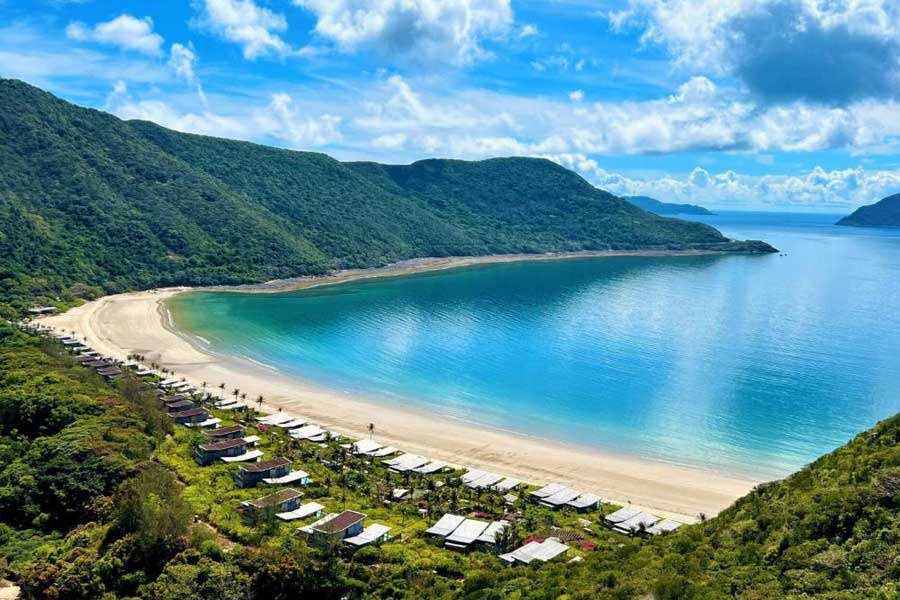
Located on the southeast coast, Sao Beach is the benchmark. Powdery white sand, clear shallow water, and calm conditions make it ideal for families and anyone who wants postcard-worthy photos. The water is genuinely that blue.
Sell it as: The Maldives beach your clients can actually walk to, with fresh coconuts and grilled seafood on the side.
Agent tip: Tour groups tend to arrive between 10am and 2pm. Tell your clients to go early (before 9am) or late afternoon. They’ll practically have it to themselves. The northern end of the beach is quieter.
Long Beach (Bai Truong) – For active travelers and sunset lovers
Stretching 20km along the western coast, Long Beach is where most of the resort development sits. The sunset views here are excellent, and there’s no shortage of water activities. This is where your adventure-seeking couples and groups will be happiest.
Sell it as: The lively hub with the best sunsets in Vietnam.
Agent tip: Most 4 and 5-star hotels are along this stretch. If your client wants convenience – beach plus restaurants plus easy access to the town – put them here.
Ong Lang Beach – For clients who want quiet
A short drive north of the main town, Ong Lang is the low-key alternative. Fewer crowds, a handful of boutique resorts, gentle water. It suits couples who want to genuinely switch off.
Sell it as: The quiet alternative that feels like you discovered something, without sacrificing comfort.
Experiences Worth Highlighting to Your Clients
The World’s Longest Cable Car to Hon Thom Island
This is a Guinness World Record holder – 8 km of continuous cable car over open ocean. It takes 15 minutes each way, and the views are spectacular. On the island (Hon Thom, also called Pineapple Island), there’s a water park and beach area.
Why it sells: It photographs incredibly well. Indian travelers love shareable experiences, and this is one of the most visually striking things in all of Southeast Asia. It also works for all ages.
Island Hopping in the An Thoi Archipelago
The southern tip of Phu Quoc is surrounded by small islands – Gam Ghi, May Rut, Hon Thom, and others. A full-day boat trip includes snorkeling over coral reefs, a floating lunch on the water, and beach stops.
Why it sells: It’s the closest thing to a liveaboard snorkeling experience without the commitment or the price. Coral quality here is better than most of Thailand’s more famous spots.
Agent tip: This is not for June to September departures. The sea can be rough. Confirm conditions with your operator before booking.
Sunset Squid Fishing
This sounds gimmicky. It isn’t. You go out as the sun sets, join local fishermen using bright lights to attract squid, and can have your catch cooked onboard. It’s a legitimate cultural experience, not just a tourist activity.
Why it sells: It’s memorable, different, and genuinely fun for families. Kids especially love it.
Pepper Farm and Fish Sauce Factory Tours
Phu Quoc produces two things it’s famous for nationally: black pepper and fish sauce. The pepper farms are fragrant and photogenic. The fish sauce factories are fascinating in an unexpected way – the scale of production is impressive, and the fermentation process is genuinely interesting to watch.
Why it sells: These add depth to a beach holiday. Clients who’ve “done beaches before” respond well to experiential add-ons like this. It gives the trip a story.
Note for Indian clients: Fish sauce is a core ingredient in Vietnamese cooking. Clients with strict vegetarian requirements should be made aware that many Vietnamese dishes contain fish sauce even when described as “vegetarian.” Manage this expectation upfront.
Phu Quoc National Park
Covering nearly half the island, the national park has trekking trails, waterfall walks, and good birdwatching. Mount Chua is the highest point and rewards hikers with panoramic views.
Agent tip: This suits nature-oriented clients. For the average beach-focused Indian family, it’s a half-day add-on, not the main draw. Frame it accordingly – don’t oversell it.
Food: Setting Honest Expectations for Indian Travelers
This is the conversation that makes or breaks the trip for many Indian clients. Be direct about what they’ll find.
The good news: Phu Quoc has outstanding seafood. Freshly caught crab, prawns, squid, lobster, and fish cooked simply with salt and pepper or lemon – this is some of the best and most affordable seafood in Southeast Asia.
The honest news: Indian food options are limited. There are a handful of Indian restaurants in Duong Dong town, but don’t promise a curry that rivals what they get at home. The island is not Bangkok or Bali, which both have strong Indian restaurant scenes.
What to tell vegetarian clients: Strict vegetarian (no fish, no egg) travel in Phu Quoc requires planning. Vietnamese cuisine is heavily fish-sauce-based. Some Indian restaurants cater to this. Luxury hotels can arrange vegetarian options with advance notice. This is manageable, but it needs to be communicated clearly before the trip, not discovered on arrival.
Local dishes worth recommending:
- Herring salad (goi ca trich): Fresh, tangy, served with rice crackers. Most clients enjoy it.
- Phu Quoc pepper crab: The island’s signature dish – fresh crab cooked with local black pepper. Excellent.
- Bun quay (pulled noodles): A Phu Quoc specialty, cooked to order at the table. Worth trying.
- Dinh Cau Night Market: Tell clients to visit here on their first or second evening. Street seafood, local snacks, cold beer, and a lively atmosphere. It’s an easy introduction to local food culture.
Agent tip: Book your clients into hotels with good in-house restaurants as a safety net. This matters more in Phu Quoc than in, say, Ho Chi Minh City, where dining options are extensive.
Accommodation: Tiers to Know
Phu Quoc has one of the strongest luxury resort lineups in Vietnam. The island developed quickly, which means most properties are relatively new and in good condition.
Ultra-luxury (position against Maldives):
- Regent Phu Quoc
- JW Marriott Phu Quoc Emerald Bay
- InterContinental Phu Quoc Long Beach Resort
- Premier Village Phu Quoc Resort (over-water villas available)
These properties have excellent pools, private beach areas, and multiple restaurants. They’re comparable to 5-star Maldives resorts in service quality, at a fraction of the per-night rate.
Upper-midscale (good for families and groups):
- Salinda Resort
- Vinpearl properties (large, consistent, family-oriented)
- New World Resort
Boutique (good for couples, repeat travelers, nature lovers):
- Mango Bay Resort (Ong Lang Beach)
- Cassia Cottage
- Green Bay Phu Quoc Resort
- Various small properties along Ong Lang and Long Beach
Agent tip: The Phu Quoc United Center (Vin group development) on the north of the island has VinWonders theme park, Vinpearl Safari, and a cluster of hotels. If you have families with young children, this area makes logistical sense – everything is close together.
Cultural Sites: Add Depth Without Overpromising
Ho Quoc Pagoda
A Buddhist pagoda set dramatically between the sea and hills. The architecture is striking, and the views from the top are good. This is a 1-2 hour visit maximum. Indian clients, particularly Hindus, often feel comfortable in Buddhist temples – the devotional atmosphere is familiar.
Sell it as: A peaceful morning stop with great photography and mountain views.
Phu Quoc Prison (Coconut Tree Prison)
A historical site from the Indochina War era. Reconstructed displays of how prisoners were held and treated. It’s sobering and informative.
Sell it for: Historically curious clients. Skip it for pure leisure travelers who aren’t interested in war history.
How to Build the Itinerary
Classic 3 Nights / 4 Days (stay at Vinpearl area – North Island)
Day 1: Arrival, check-in, evening Grand World
Day 2: Full Day Visit VinSafari and VinWonder
Day 3: Full-day island hopping and snorkeling at An Thoi, Cable car to Hon Thom
Day 4: Departure
Classic 4 Nights / 5 Days (stay in Duong Dong town)
Day 1: Arrival, check-in, evening at Dinh Cau Night Market
Day 2: Sao Beach morning, pepper farm and fish sauce factory afternoon
Day 3: Full Day Visit VinSafari and VinWonder, Grand World
Day 4: Full-day island hopping and snorkeling at An Thoi, Cable car to Hon Thom
Day 5: Departure
This is a clean, well-paced itinerary that leaves room to breathe. Don’t overload it.
Extended 6 Nights / 7 Days (with north/south balance)
Add: Half-day at Phu Quoc National Park, cooking class, and a full resort day for families who want to simply relax.
Quick Objection Handler
“We’ve already done Vietnam.”
Phu Quoc is its own thing. It barely feels like mainland Vietnam. Think of it as Vietnam’s answer to a private island resort. Different audience, different experience.
“Is the food okay for vegetarians?”
Manageable with planning. Luxury hotels handle it well. There are Indian restaurant options in town. Flag it with your hotel at booking.
“Is it safe for families?”
Very. The island is calm, roads are not heavily trafficked (outside the main town), beaches are gentle, and the resorts are well-equipped for families.
“How does it compare to Bali?”
Beaches are better. Less commercialized. Fewer tourists. It’s newer as a destination, which some clients see as a positive.
“Is it worth it for just 4 nights?”
Yes. The island is compact. 4-5 nights is actually the right duration. More than 6 and clients run out of things to do.
Practical Details
- Currency: Vietnamese Dong (VND). USD accepted at many tourist-facing businesses. Card payments work at hotels and major restaurants. ATMs available in Duong Dong.
- Language: Basic English spoken at hotels and tourist businesses. Less so at local markets – pointing and numbers on a phone works fine.
- Getting around: Taxis (metered, reliable) and Grab (ride-hailing app) are the practical options. Hotel transfers are easiest. Motorbike rental is available but not recommended unless your client is an experienced rider.
- Power: Vietnam uses 220V/50Hz. Type A, B, and C sockets. Indian clients with round-pin plugs (Type C/D) generally work fine. Worth mentioning anyway.
- Health: Standard travel health precautions apply. Mosquito repellent is important, especially for jungle and waterfall visits. Advise clients to pack it.
The Summary
Phu Quoc is a legitimate luxury beach destination with the infrastructure to back it up. It’s not undiscovered – but it’s also not overrun. The price-to-quality ratio is still strong compared to Maldives, and the activity options are far superior.
For Indian agents, this is a destination that’s easy to sell because the value proposition is clear. Your honeymoon couples want the beach and the romance. Your families want the theme parks and the water activities. Your luxury clients want the five-star resorts at prices that feel almost unreasonable by comparison.
Learn the destination. Know the seasons. Set honest food expectations. And you’ll have clients coming back to book it again.
This guide is prepared by Absolute Asia Travel – a fully bonded, licensed travel company based in Hanoi, Vietnam, specializing in high-quality private tours across Vietnam & Indochina.
For trade inquiries, itinerary support, or group pricing, contact: sales@absoluteasiatravel.com | www.absoluteasiatravel.com