Vietnam is fully open to Indian travelers in 2026. Get the latest e-visa, Phu Quoc exemption, Digital Arrival Card and Health Declaration rules.
Vietnam Entry Rules for Indians 2026: E-Visa, Phu Quoc & New Forms
Vietnam is fully open, and frankly, it has never been easier for your Indian clients to come and visit. The COVID rules are long gone. No quarantine, no testing, no vaccine proof, no health insurance minimum. What replaces them is a much simpler set of immigration requirements, plus two new pre-arrival forms that your clients need to complete online before they board the plane.
Here is the current picture, straight from the front line.
1. Visa Options for Indian Passport Holders
Indian nationals are not on Vietnam’s visa exemption list for the mainland. Travelers heading to Hanoi, Ho Chi Minh City, Da Nang, Hoi An, or Ha Long Bay need a valid visa, no exceptions. You have three practical routes:
- E-Visa (recommended for almost all leisure clients).
The e-visa has been available to Indian citizens since August 15, 2023, with validity extended to 90 days and a choice of single or multiple entry. It is applied for entirely online, no embassy visit required, and accepted at 83 international entry and exit points. The government fee is USD 25 for single entry, USD 50 for multiple entry. Processing time is 3 to 5 working days. Apply through the official portal at evisa.gov.vn. Tell your clients to apply at least 7 to 10 days before departure, especially during Tet and peak season. - Visa on Arrival (VOA).
Available at international airports only, not at land or sea borders. Requires a pre-approval letter arranged through an agent before flying. Useful only when the e-visa system is down or there is a last-minute booking. For most cases, the e-visa is cleaner and cheaper. - Embassy sticker visa.
Available at the Vietnamese Embassy in New Delhi. Mostly relevant for long stays, business visas with extensions, or family visit cases that don’t fit the online system neatly.
Passport must have at least 6 months validity beyond arrival and 2 blank pages.
2. The Phu Quoc Visa-Free Exception (Read This Carefully)
This is the one piece of Vietnam visa policy that catches the most Indian travelers out, and I want to be direct with you because the consequences are real.
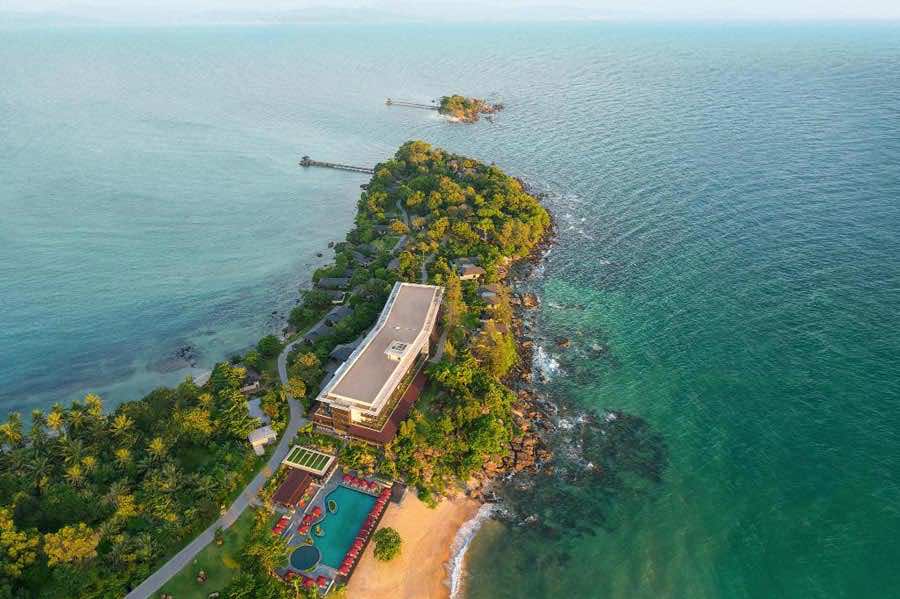
Phu Quoc Island offers a 30-day visa exemption for Indian nationals. It is the only place in Vietnam where this applies. But every single condition below must be met at the same time, with no exceptions:
- Direct international arrival into Phu Quoc International Airport or Seaport from another country
- Stay only on Phu Quoc Island for the duration of the trip
- Direct international departure from Phu Quoc to another country
- Passport valid for at least 6 months
- Confirmed onward or return ticket
Flying into Ho Chi Minh City or Hanoi first and then taking a domestic connection to Phu Quoc does not qualify. No mainland stopover. No day trip to Ho Chi Minh City. If your client lands in HCMC first, the exemption is void and they need a proper visa.
On April 6, 2026, the Indian Embassy in Hanoi issued a travel advisory specifically warning Indian travelers about Phu Quoc visa rules and passport risks. The embassy flagged two main issues. First, the “visa trap”: if a client enters Phu Quoc visa-free and then needs to reach the mainland for a medical emergency or any other reason, they cannot legally do so without a valid visa. There have been actual cases of Indian travelers needing hospital treatment in Ho Chi Minh City and facing immigration delays. Second, passport loss creates serious complications when the holder is on a visa-free entry.
My honest recommendation for your trade: unless the client genuinely wants only a beach holiday on Phu Quoc with no mainland touch, apply for the 90-day e-visa anyway. It costs USD 25, takes 3 days, and removes every single one of these risks. The savings on the visa fee are not worth the operational headache if anything goes wrong on the ground.
3. Two New Pre-Arrival Requirements You Must Brief Your Clients On
These are new in 2026 and many agents are still not aware. Both are free, both are online, and both are mandatory.
Digital Arrival Card.
As of April 15, 2026, this is a mandatory electronic declaration required for entry through Tan Son Nhat International Airport (SGN) in Ho Chi Minh City. As of June 2026, the requirement has expanded to Noi Bai International Airport (HAN) in Hanoi. Da Nang and land and sea border gates are next in line, though no official date has been confirmed. The form must be submitted within 72 hours before arrival at prearrival.immigration.gov.vn. It generates a QR code that immigration officers scan at the counter. The form is free. Be cautious about copycat websites charging USD 20 to 50 for what is a free government service.
Health Declaration under Decree 165/2026/ND-CP.
From July 1, 2026, a mandatory health declaration applies to all travelers crossing any Vietnamese border, in any direction, at any port. It must be submitted within 7 days before entry, exit, or transit. The declaration is separate from the Digital Arrival Card and is managed by the Ministry of Health, not Immigration. It can be submitted online or on paper using Appendix V of the decree, with paper forms available from airlines and at border gates.
So a client arriving in Ho Chi Minh City or Hanoi from July 1, 2026 onwards needs all of the following: a valid e-visa, the Digital Arrival Card (within 72 hours of arrival), and the Health Declaration (within 7 days of arrival). All three are separate.
4. What This Means for Your Trade Practice
A few practical points for B2B partners:
- Add a visa and pre-arrival checklist to every Vietnam booking confirmation you send Indian clients. Three items, all free: e-visa, Digital Arrival Card, Health Declaration.
- Default to the 90-day e-visa for any client touching mainland Vietnam. Skip the Phu Quoc exemption unless the client is genuinely doing an island-only trip.
- Remind clients to keep a printed and digital copy of the e-visa approval, the Digital Arrival Card QR code, and the Health Declaration confirmation. Immigration counters at SGN and HAN move faster when documents are ready.
- Brief your clients on passport rules: 6 months validity, 2 blank pages, and immediate police report if lost in Vietnam.
We at Absolute Asia Travel handle all of this for you. From visa support to airport assistance, our DMC team in Hanoi takes care of the documentation logistics so your sales team can stay focused on selling the trip.
If you have a complex case or a group with mixed nationalities, just send us the passenger list and we will sort out the visa pathways before you quote the trip.